
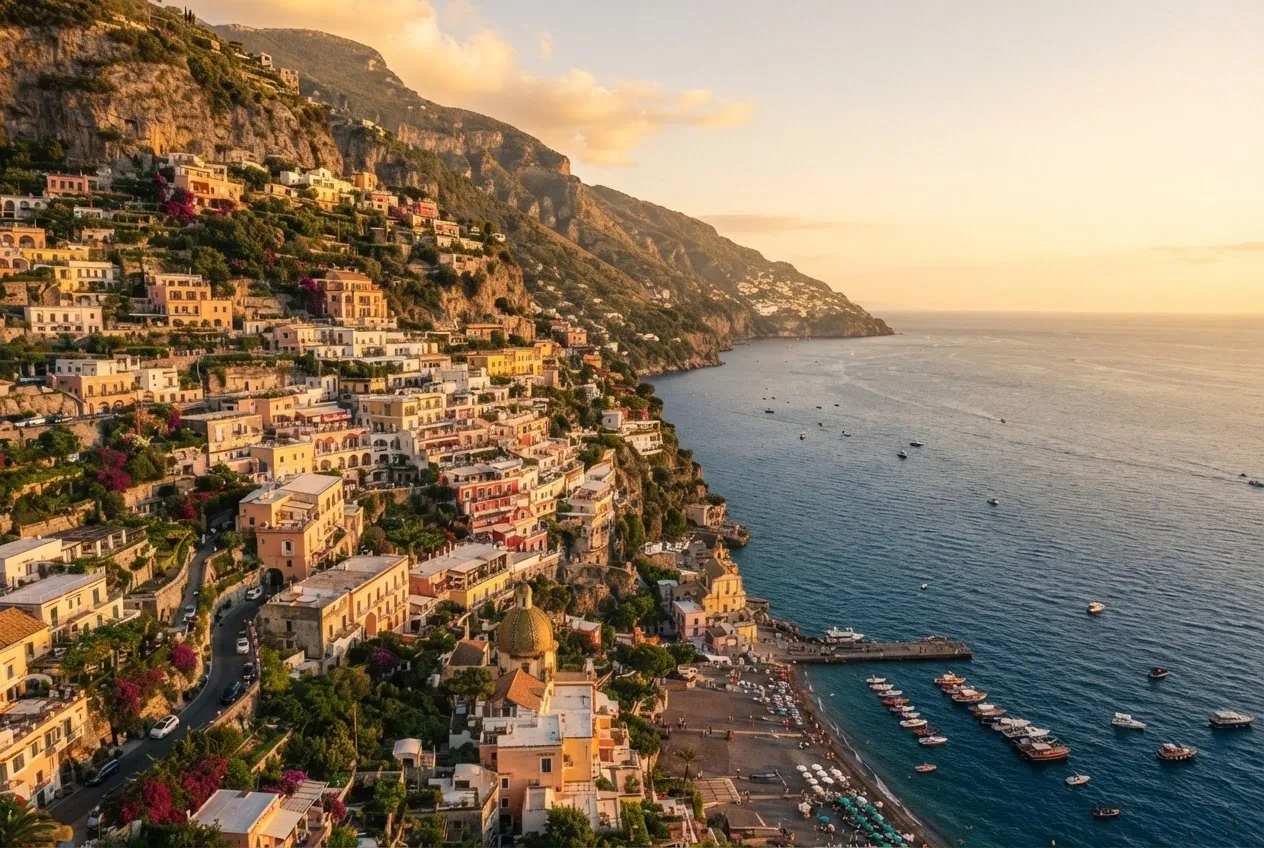
The Amalfi Coast is one of those places that lives up to its photographs and then refuses to let you go. I spent eight days walking its cliff paths, eating in family-run trattorias, and painting everything I could see — which, from most points on this coastline, is extraordinary. Here is my honest, ground-level account.
Getting Around (the Real Way)
Everyone imagines the Amalfi Coast from a boat or from the window of a convertible. The reality for most visitors is the SITA bus: crowded, clinging to the cliff road, and genuinely thrilling. I used it for longer stretches between Amalfi and Positano, but whenever I could, I walked the ancient mule paths that predate the coastal road by centuries. The path of the Gods (Sentiero degli Dei) above Positano is the most spectacular walk I have done anywhere in Europe.
Where I Stayed
I split my time between two bases. The first four nights were in Ravello, up in the hills above Amalfi town. It's quieter than anywhere on the coast itself, the air smells of lemon groves, and the views from the belvedere are — there is no other word — staggering. I stayed at a small pensione run by a retired schoolteacher and her husband, who grew most of their breakfast ingredients in the garden. I painted their lemon trees on my second morning.
The final four nights were in Praiano, a quieter alternative to Positano that sits on the same dramatic stretch of coast but without the celebrity price tag or the crowds. From my small terrace I could see the Faraglioni rocks of Capri on clear mornings. The walk down to the small harbour at Marina di Praia took four minutes; the walk back up took considerably longer.
The Food: An Honest Ranking
Campanian food is built for this coastline. The lemons are the size of grapefruits, the buffalo mozzarella is fresh and milky, the seafood comes off boats that you can see from the restaurant window. My honest ranking of the best meals:
- Cumpa' Cosimo, Ravello — a local institution. Mixed pasta tasting plate, slow-cooked rabbit, tiramisù made in-house. Netta, the owner, has been cooking here for decades and it shows in every dish. Busier than it looks; book ahead.
- Da Armandino, Marina di Praia — twelve tables, no menu card, just whatever came off the boats that morning. I had grilled octopus, pasta with sea urchin, and a carafe of local white wine for an amount of money that felt almost embarrassing. The best seafood meal of the trip.
- Bar Pasticceria Andrea Pansa, Amalfi — not a restaurant but mandatory. The sfogliatella riccia and the delizia al limone are worth the queue. Have your pastry at the bar standing up, the way the locals do.
The Paintings
The light on the Amalfi Coast is unlike anywhere else I've painted. The sea is a specific shade of blue-green that shifts constantly with the time of day and the angle of the cliffs, and the whitewashed buildings catch the golden hour in a way that makes everything glow. I finished six pieces during the eight days: two large oils of the coastline from the Path of the Gods, two watercolours of Ravello's garden terraces, a small study of the Positano church dome, and one very hurried sketch of the Praiano harbour at sunset that turned out to be my favourite of the lot. Several are now available in the shop.
Practical Advice Worth Having
- Skip Positano as a base: Beautiful, undeniably. But expensive, crowded, and full of people who look like they're in a catalogue. Stay in Praiano or Ravello instead and visit Positano for a half-day.
- Walking shoes are non-negotiable: The mule paths are ancient stone steps, uneven and steep. Sandals and flip-flops are for the terrace only.
- Water: Carry more than you think you need on the walks. It's hotter than forecast on exposed cliff paths in September.
- Limoncello: Buy it from a farmhouse or a small producer, not a gift shop on the seafront. The difference in quality is significant, and the price is lower.
On my last evening in Praiano I sat on the terrace with a glass of Fiano, watched the sun drop behind the headland, and thought: I will have to come back. Not to see anything I missed, but because some places earn a second look.