
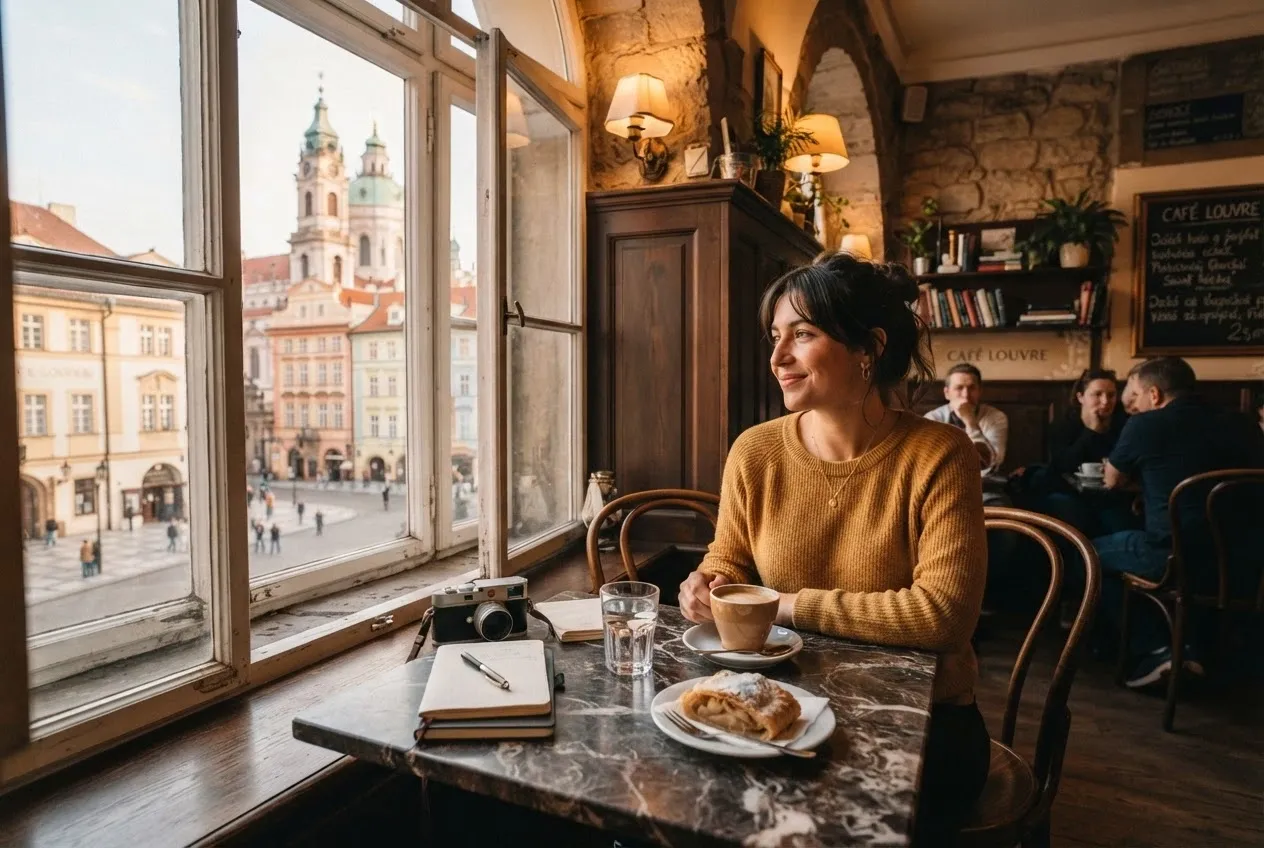
I arrived in Prague on a grey Thursday morning with three days to fill and no firm plan beyond 'see the bridge, find good coffee.' I left four days later — I quietly extended by one — with a full sketchbook, a baffling amount of svíčková consumed, and a firm opinion that Prague is one of the most underrated cities in Europe for a slow, wandering kind of trip.
Old Town and the Bridge
Everyone goes to Charles Bridge, and for good reason: the Baroque statues, the Gothic towers, the way the river bends away in both directions. What nobody tells you is that the bridge is best at 6 AM or after 9 PM, when the tour groups have gone. I went at dawn on my second morning, practically alone, and spent an hour with my sketchbook leaning against one of the stone pillars. It was cold and quiet and perfect.
Where I Stayed: Malá Strana
I stayed in a small boutique hotel on a quiet cobbled street in Malá Strana (Lesser Town), about a ten-minute walk from the bridge. The building dated from the 18th century, and my room had the original painted wooden ceiling — something I stared at every morning over my first coffee. Breakfast was included and genuinely good: fresh bread, local ham, hard-boiled eggs, and strong Czech coffee. It's the kind of hotel that feels like staying in the city rather than in a hotel in the city.
The Coffee Scene
Prague has a genuinely excellent specialty coffee scene that most visitors walk straight past on their way to the tourist cafés on Old Town Square. The places I kept returning to were small, independently run, and reliably good. Kavárna Místo in Vinohrady became my afternoon ritual — a flat white, a slice of poppy seed cake, and ninety minutes of drawing. Highly recommended if you find yourself on that side of the river.
What I Ate
Czech food gets an unfair reputation as heavy and beige. Done well, it's satisfying and full of flavour — especially in autumn when the weather demands it. My highlights:
- Svíčková at Lokál Dlouhááá — sirloin in cream sauce with bread dumplings, a spoonful of cranberry, and a slice of lemon. I ordered it twice. No regrets. The Pilsner Urquell on tap here is also exceptional.
- Roast duck at Restaurace Mlejnec — a quieter restaurant near the river, popular with locals rather than tourists. Half a duck, red cabbage, two kinds of dumpling. Simple and exactly right.
- Náplavka Farmers' Market — every Saturday morning along the embankment. Fresh bread, smoked cheeses, pickled vegetables. I bought a jar of fermented plum and a chunk of caraway rye that lasted me two more days of walking.
What I Painted
Prague is almost unfairly beautiful to paint. The roofline from Letná Park, the bridge towers reflected in the Vltava at dusk, the geometry of tram wires over cobblestones — I barely stopped drawing the whole time I was there. I finished two oil pastels and three ink-and-wash sketches. The Letná roofline piece is currently in the shop; it's one of my personal favourites from this entire trip.
A Few Practical Notes
- How long to stay: Three days is the minimum for a proper visit; four is better. Five if you want to make it to Kutná Hora for a day trip.
- Best neighbourhood to stay: Malá Strana or Vinohrady. Both walkable, both quieter than Old Town, both with better restaurants.
- Currency: Czech koruna, not euros. Card payments are widely accepted but keep some cash for markets and smaller cafés.
- Charles Bridge: Go early. Seriously. 6 AM in autumn is magical; 11 AM in summer is a crowd-management exercise.
Prague doesn't try to impress you. It just exists, baroque and cobbled and slightly crumbling at the edges, and it lets you fall in love with it at your own pace. That's the rarest thing a city can do.